
Marketing and Branding: Winning Customer Hearts -Customer Personality Matrix
Hello! Welcome to today’s session. Last time we explored customer service delivery, kindly find the link to the article attached in case you missed it. Today, we will be covering a very interesting topic: Winning our customers’ hearts by understanding their personalities. Have you ever interacted with a client and felt like you were simply…
Hello! Welcome to today’s session. Last time we explored customer service delivery, kindly find the link to the article attached in case you missed it. Today, we will be covering a very interesting topic: Winning our customers’ hearts by understanding their personalities.
Have you ever interacted with a client and felt like you were simply not understanding each other?
Many business owners—and anyone who deals directly with clients—have had that quiet thought: “This client is too much to handle.”
But the truth is, no client is inherently difficult. What we often experience is a mismatch in communication and expectations.
At its core, every business exists to attract and retain customers. When we fail to do that, sustainability becomes nearly impossible. That’s why it’s not enough to understand what our customers want—we must understand how they think, communicate, and prefer to be engaged.
When we learn to navigate different customer personality types, we don’t just solve problems—we build trust, strengthen relationships, and create long-term loyalty.
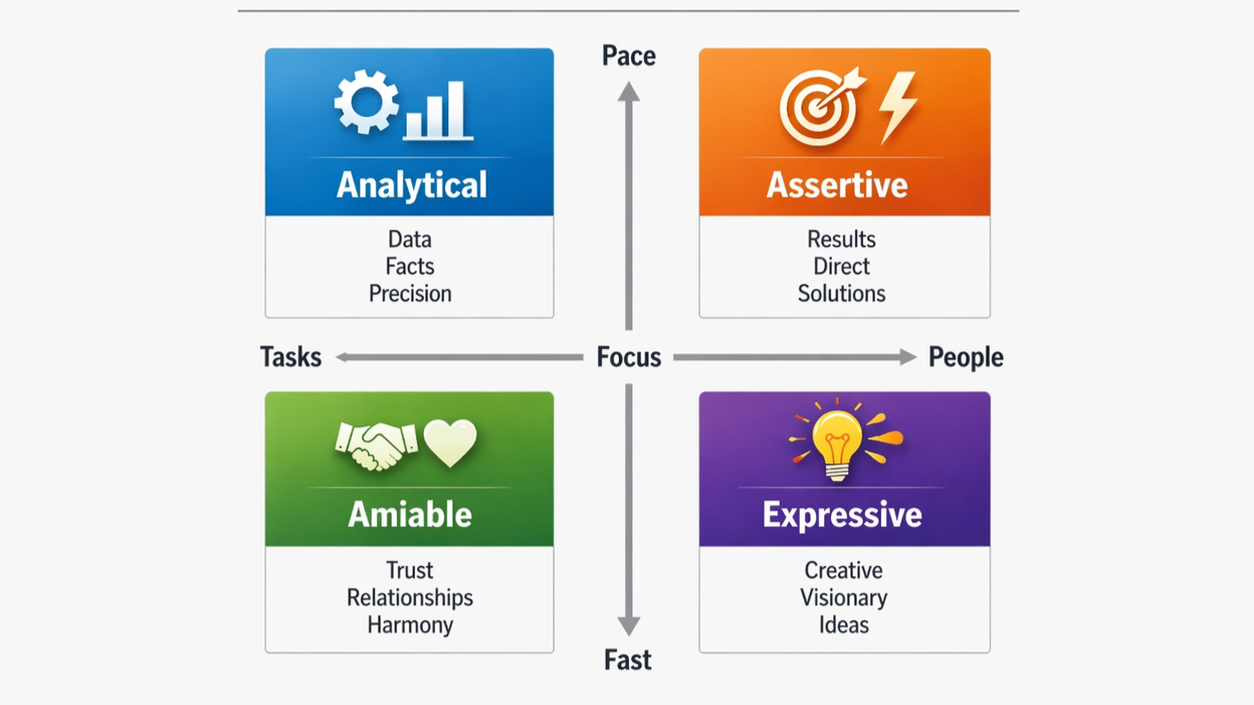
Let’s explore four key customer personality types and how to work effectively with each:
1. Analytical Customers: As the word suggests, these customers analyze everything you present to them. They are detail-oriented, data-driven, and prefer facts over hearsay. They like to be informed about every aspect of their work, including the process followed to arrive at conclusions. They are not easily swayed by emotions or hype; instead, they prefer an organized and structured approach. They also take time to make decisions because they require details, statistics, and supporting documents.
How to handle such clients:
• Have your data and facts right. Always come prepared with comprehensive data and back up every claim with evidence.
• Be precise and to the point. Present data in a clear, logical, and structured manner. Avoid exaggeration and vagueness.
• Answer questions thoroughly. Be ready with accurate and well-thought-out responses. If you don’t know something, commit to finding out and follow through.
• Respect their need for detail and give them time to process information. Do not pressure them into making decisions.
• Be professional and objective. Avoid unnecessary small talk.
2. Amiable Customers: Amiable customers prioritize relationships, trust, and personal connections. They prefer working with people they like and feel comfortable with. They value collaboration and are keen on building long-term partnerships. They are loyal once trust is established but can be slow to make decisions if they perceive a risk to the relationship. These clients like being reassured that their issues are being taken care of.
How to handle them:
• Invest time in building rapport and trust. Show genuine interest in them and their concerns, as this helps build a personal connection.
• Build discussions around partnerships, collaboration, and mutual benefit.
• Ensure harmony by presenting solutions that promote cooperation and minimize conflict.
• Acknowledge their emotions and validate their perspective while offering support and reassurance.
• Be patient with their decision-making process.
3. Assertive / Direct Customers: Assertive clients get straight to the point. They demand efficiency and want solutions fast, and sometimes come across as overbearing or impatient. They do not like wasting time, and if you identify a problem, come up with realistic solutions. They value competence and expect the service provider to be prepared and knowledgeable. They are not emotional and are less focused on relationships.
How to handle them:
• Be direct and concise. Avoid small talk or lengthy introductions—focus on the core business of the day.
• Demonstrate your competence and expertise by having all necessary information and answers at your fingertips. Show them you can deliver; that’s how you win their trust.
• Respect their time. Be punctual, do what you said you will do, request resources on time to meet deadlines, and communicate early if there are delays.
• Present clear and realistic expectations. Do not overpromise—they value honesty and practicality.
• Focus on results and solutions. Most of the time, they are not interested in the methodology; they want the problem, the solution, and the support required to achieve the outcome.
• Do not take their tone personally—they are not trying to be difficult; they simply value efficiency and realism.
4. Expressive Customers: Expressive customers are very creative, charismatic, and often visionary. They are driven by innovation, new ideas, and the bigger picture. However, they may struggle with completing ideas and can easily be distracted by new opportunities. They may require support in focusing on specific tasks. Their primary concern is often creativity, recognition, social interaction, and the bigger picture.
How to handle such clients:
• Embrace their vision. Focus on the bigger picture and how your solutions can help them achieve it.
• Offer to manage the details and follow through to ensure projects are completed.
• Acknowledge their contributions and celebrate their achievements.
• Keep interactions engaging and dynamic. Avoid overwhelming them with too much detail.
Conclusion
At the heart of every successful business is the ability to attract and retain clients. But clients are not uniform—they come from different backgrounds, shaped by different experiences, and naturally approach situations in different ways. As business owners, entrepreneurs, and professionals, our role is to meet them where they are.
Let me conclude by saying that understanding customer personalities is more than just a soft skill—it is a strategic advantage. It allows you to connect more deeply, serve more effectively, and grow more sustainably.
Let’s build together!